mad gardeners symposium 2012

Seeing Green: Real Changes

The annual symposium will be held on Saturday, March 3, 2012 beginning at 8:30 a.m. at Housatonic Valley Regional High School in Falls Village. Featured speakers inlucde Janet Marinelli, Edmund C. Snodgrass and Stephen Orr. For more information, download the brochure and registration form through this link or visit our Events page.

didymo identified in the Farmington river

First Confirmation of this Invasive Species in Connecticut

The Connecticut Department of Environmental Protection (DEP) announced that the highly invasive freshwater alga, Didymosphenia geminata, known as "didymo", has been discovered in the West Branch Farmington River, a very popular trout stream in northwestern Connecticut.

The presence of didymo was first confirmed in the northeastern United States in 2007, and has since spread to other popular trout streams in a number of northeastern states (New Hampshire, Vermont, New York, Pennsylvania, Maryland, West Virginia and Virginia). This is the first report of didymo in Connecticut.

DEP first learned of the possible presence of didymo in the West Branch Farmington River from several anglers on March 18 th . One of these anglers also provided an initial sample to DEP. Following initial review by DEP staff, samples were sent to the Vermont Department of Environmental Conservation where biologists have direct experience identifying didymo. Late last Friday, Vermont officials confirmed that the sample was indeed didymo.

"This find is very troubling," said DEP Deputy Commissioner Susan Frechette. "Extensive blooms of this organism can harm the river ecosystem and decrease its recreational and economic value...."

For more information, download the press release through this link.

A new weed is coming your way....
We hope you never see it.

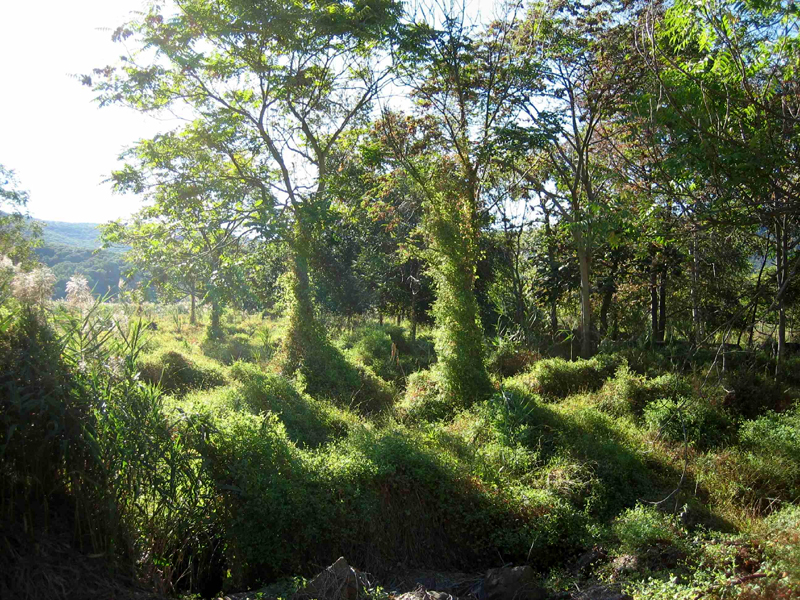
You may already have heard about Asian Mile-a-Minute Vine, (MAM), which was accidentally introduced into Pennsylvania, and is rapidly moving north, smothering fields, meadows, and woodland edges. An annual that can grow six inches a day, it blankets everything, blocking other plants’ light. Only tall trees may survive.

The invasion front is south of us, but three populations have been found in Litchfield County. The only way to stop this serious threat to New England's agriculture and environment is to prevent the spread of seeds....

how you can help

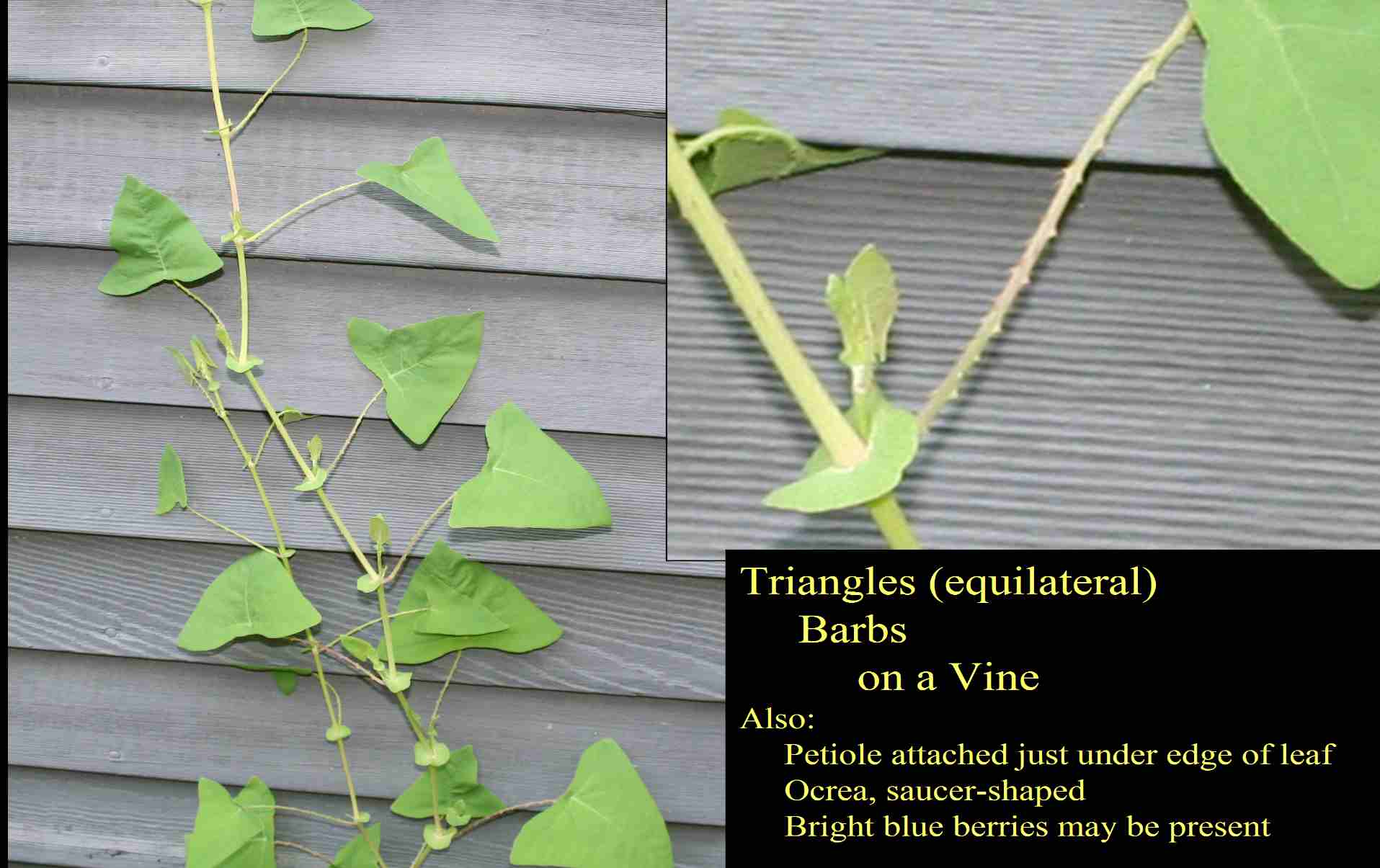
Start by educating yourself. View and printout information on Mile-A-Minute from this web site. Get to know how to identify this invasive plant by its triangular leaves and tiny barbs on weak stems clambering over trees and shrubs.

Check your own backyard. When you are gardening, walking, hiking, visiting — be aware and look for signs of invastive plants.

Rely on experts. If you suspect Mile-A-Minute Vine, REPORT ALL SIGHTINGS to knelson151@sbcglobal.net or donna.ellis@uconn.edu or The Connecticut Invasive Plant Working Group at 860-486-6448....

Be on the Lookout for Mile-a Minute Vine!

Mile-a-Minute Vine (Persicaria perfoliata formerly Polygonum perfoliatum), an invasive Asian annual weed accidentally introduced from Asia into Pennsylvania, has been moving steadily northward. Until recently, the northern front of the invasion was southern New York State and southwestern Connecticut. In 2004 and 2005, populations were discovered in New Milford and Bridgewater, Connecticut. In 2007 two large populations were discovered in Newtown....